I wonder if lgbt people’s love for elves is that strong bc it was our only way to play gender nonconfirming characters. Even when we didn’t know that its even a thing.
Some basic fantasy rpg in 2003: theres not much difference between male and female elves physique. Also women can fight and men can have long hair. Not like us normal humans amiright! Wink wonk
10 old me: SLAMS PLAY ELF BUTTON
Additional game theory: many LGBT people in their adult lives switch over to loving dwarves because they are also gender nonconforming but in the less “acceptable” way (Not the tall, skinny, femme-androgynous type society considers the “good” androgyne) and instead explore the more masculine/“low effort” form of GNC (less lithe/More body fat, body hair on femme individuals, loud/unashamed behavior) which we were too insecure to explore in our adolescence
We can then go one further and realize that literally no one other than humans gives a rat’s ass about strict gender roles or strong sexual dimorphism.
Dwarves? Everyone is broad shouldered, short, and hairy, and whatever gender they tell you they are is what works, because other dwarves can’t even tell. A dwarven wedding night is an exciting mystery for both parties.
Gnomes are tiny, excitable, colorful, nerdy, and loud. Kinsey scale? They’re all way too curious to not try everything at least once. They probably made some technomagical machine that can tinker with genes and just zap people whatever primary and secondary sex characteristics they want.
Orcs don’t give a shit as long as you bring home plunder and food. Your gender role is “axe.”
Halflings are probably more dimorphic and a little more conservative since they’re basically tiny pastoral humans. But (at least if they’re Tolkien style) they also have the social mores of English country gentility, which is big on not saying anything about it in public. You buck gender norms as a halfling, you might get some funny looks, but they’ll go out of their way to at least pretend everything is normal.
Dragonborn are so rare and have such low fertility rates that I imagine they have the same thing going on that penguins, swans, and some lizards do, where the most important thing is raising an egg to hatching, and it doesn’t really matter what gender the parents are. Birth parents die or can’t handle the egg, there’s always a queer family waiting to pick up the slack. Also, hermaphrodism is much more common in birds and lizards than mammals, so intersex dragonborn is probably a thing.
Tieflings and Aasimar are literally descended from demons and angels, and demons and angels are very alien and often don’t even have a concept of gender binaries. Their descendants are likely not particularly binary, either.
One thing that’s fascinated me about typical fantasy tropes of late is how ‘humans’ are most often associated with… well, basically, Straight White Culture. They’re pretty much always coded as ‘vaguely western European’, borrowing heavily from either Britain or Rome or a mash up, like it’s very rare to have ‘humans’ be based on, say, indigenous American cultures or China or India or something. If those show up as elements, nine times out of ten it’s attached to some fantasy race. If the elements are attached to humans, they are Different Humans Who Live Off In Unseen Foreign Lands, like the Haradrim in Tolkien’s works.
Which means that human culture is also, generally, more patriarchal, more concerned with a gender binary, heteronormative, more obviously influenced by elements from Christianity even if their predominant religion is nothing like that, and stuff along those lines. Because in our own world, these are the cultural assumptions that are most commonly touted as ‘neutral defaults’. So when writers go ‘okay so humans are just The Normal Ones’, they create a world where everyone who doesn’t fit into those cultural mores is literally not human.
But while that (obviously) has its major, major downsides, because this is fantasy, I think a lot of queer people especially are eager to latch onto the corollary that ‘you’re not human – but you might be X instead’. Elves are cool. Dwarves are cool. Orcs are cool. Or at least, they can be, if you’re putting in a minimum of effort. And, while these beings might not technically be ‘human’, in these setting you are likely to still be a person even if you aren’t human.
LGBT+ folks are kind of different from a lot of other marginalized groups in that, most of us are still born to straight parents. Unless you’re lucky, you don’t inherit this aspect of culture from your family. It’s something you have to find and figure out for yourself as you’re growing up, and usually, we can only do that once we’re closer to adulthood. But when you’re young, and you’ve just got this feeling that you’re different even from your own kin, there can be magnificent comfort in going ‘I’m like an elf, though’. I’m like them, I have PEOPLE, I might be different from humans but in this fantasy, that doesn’t matter.
IDK I don’t really have a clear thought process on the whole thing, but I think it probably also works for people who feel culturally disconnected from their roots, or have too much internalized hatred for their real-world culture to embrace it just yet. Because in all those situations, it can feel like you’re ‘not human’, so there is appeal in escaping to fictional realms where not being human doesn’t invalidate your personhood. Where you don’t have to be human or, really, to fit into the boxes of those values, to belong.
(…And then you grow up and you actually kind of hate that fantasy stories center humans so much, that it’s supposed to be because humans are ‘universal’ and ‘relatable’ when your experience with the genre has led you to find them as anything but.)
As a linguistics nerd, I’d like to formally suggest “Nespring” as a nonbinary equivalent to niece/nephew and “Avaun” as a nonbinary equivalent to aunt/uncle
Nespring: literally meaning “the offspring of my sibling” from the old English roots “offspring” which is just ‘of spring’ and the Latin root “nepos” that both niece and nephew are derived from
Avaun: derived from the roots of both “aunt” and “uncle,” the anglo-French “aunte” and the Latin “avunculus”
Stuff I Learned at My Writing Workshop (That I’m Kicking Myself in the Head for Not Realizing Sooner):
– The difference between a book that grabs you from the beginning vs. one that you’re on the fence about tossing out the window is winning your trust. It’s why it’s “easier” to read books by authors you already know, or fanfic where you’re familiar with the characters. Winning the reader’s trust as quickly as possible should be your first goal as a writer when you’re going back and editing your first draft. This can be accomplished by things like: speaking authoritatively about the subject (even if it’s utter bullshit), graceful prose, or establishing quickly in the story what it’s about. For example,“Character A had a problem. Character B didn’t love them back, so Character A was going to kidnap them so they would.” Maybe it’s not a story you want to read, but you are now firmly couched in what you signed up for in this story and the promisethe author is going to deliver on before the end.
– Characters need goals. They need goals in every moment and in every scene. Everycharacter needs a goal in every moment and in every scene. Maybe they’re not directly pursuing that goal right this very moment but it’s probably always at the back of their mind. Romances and detective stories are the easiest to deliver on this need. Character A wants to win their love. Detective A wants to solve the case. Even when they’re having tea with grandma, their thing is at the back of their mind. Keeping your character and your story focused on this thing they want helps pull your reader along and keeps them engaged on the “So what?” and “Why are we reading this scene?” questions of why they should keep reading.
– Characters shouldn’t just have things they like, they should have obsessions. This is the one I’m kicking myself for. The scientists in Pacific Rim are eccentrically obsessed with studying their thing. Thorin in the Hobbit is obsessed with regaining his home. Katniss Everdeen is obsessed with protecting her sister. Every crazy whackadoodle fandom darling character is obsessed with something. What do they have in common? They’re intensely obsessed with the thing that they care about. We love characters who are obsessed with things beyond reason, whether it’s reclaiming their home stolen by a dragon, or building artisanal bird houses, saving your sister, or studying monsters. Everyone “likes” things, but people and characters who are obsessed with something fascinate us. Examine the characters you’re most attracted to writing in fanfic, and examine your original characters if you’re trying to build those, and figure out what are they obsessed with and how does that inform their character. That’s the thing that’s going to make readers care about them.
Stuff I Learned at My Writing Workshop (That I’m Kicking Myself in the Head for Not Realizing Sooner):
– The difference between a book that grabs you from the beginning vs. one that you’re on the fence about tossing out the window is winning your trust. It’s why it’s “easier” to read books by authors you already know, or fanfic where you’re familiar with the characters. Winning the reader’s trust as quickly as possible should be your first goal as a writer when you’re going back and editing your first draft. This can be accomplished by things like: speaking authoritatively about the subject (even if it’s utter bullshit), graceful prose, or establishing quickly in the story what it’s about. For example,“Character A had a problem. Character B didn’t love them back, so Character A was going to kidnap them so they would.” Maybe it’s not a story you want to read, but you are now firmly couched in what you signed up for in this story and the promisethe author is going to deliver on before the end.
– Characters need goals. They need goals in every moment and in every scene. Everycharacter needs a goal in every moment and in every scene. Maybe they’re not directly pursuing that goal right this very moment but it’s probably always at the back of their mind. Romances and detective stories are the easiest to deliver on this need. Character A wants to win their love. Detective A wants to solve the case. Even when they’re having tea with grandma, their thing is at the back of their mind. Keeping your character and your story focused on this thing they want helps pull your reader along and keeps them engaged on the “So what?” and “Why are we reading this scene?” questions of why they should keep reading.
– Characters shouldn’t just have things they like, they should have obsessions. This is the one I’m kicking myself for. The scientists in Pacific Rim are eccentrically obsessed with studying their thing. Thorin in the Hobbit is obsessed with regaining his home. Katniss Everdeen is obsessed with protecting her sister. Every crazy whackadoodle fandom darling character is obsessed with something. What do they have in common? They’re intensely obsessed with the thing that they care about. We love characters who are obsessed with things beyond reason, whether it’s reclaiming their home stolen by a dragon, or building artisanal bird houses, saving your sister, or studying monsters. Everyone “likes” things, but people and characters who are obsessed with something fascinate us. Examine the characters you’re most attracted to writing in fanfic, and examine your original characters if you’re trying to build those, and figure out what are they obsessed with and how does that inform their character. That’s the thing that’s going to make readers care about them.
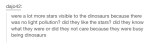
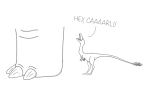
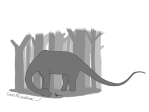
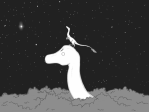
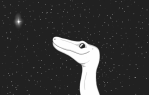
Don’t worry, guys. Carl is clearly a brachiosaurus, which lived during the Jurassic period. (And before anyone says our lil’ boy Steve is a velociraptor and therefore puts our comic in the late cretaceous, aka the time of the comet–that lil guy could easily be a compsognathus or a caudipteryx, both Jurassic-era species of small theropod dinosaurs. So the light getting bigger every night is going to pass by harmlessly, and Steve and Carl can go on enjoying the stars together until they die of old age, since Carl has very few natural predators at his size and I bet he’ll protect Steve, if he needs it (though small, fast and carnivorous as Steve is, he probably won’t).
So it’s all good!!
That entire response explaining how these two characters didn’t die a fiery death but instead lived long and happy lives literally made my day.



 funeral-biscuit