someone: so what do you think is the solution to homelessness?
me, socialist:
Let homeless people occupy peopleless homes, build houses for use rather than exchange, 3D print comfortable houses in a day, convert corporate skyscrapers into housing and commercial malls into publicly-accessible community centers with living commons and entertainment
When you say it to people and they break
“But the money? … we can’t just? But, Money? We can’t just… help… people? Can we? The Money. We can’t just help people? Like that? We can’t just? Money?”
There’s more to it than free real estate.
A massive portion of homeless people are mentally ill, and many of those illnesses aren’t being treated. Homeless people who have been on the streets and had their illnesses untreated for most of their lives aren’t going to adjust super well to suddenly having a place to live.
We need to build safety nets. We need social workers and mental health care professionals to help the homeless.
Every person deserves a roof and health care. Those two things need to go hand in hand.
The Housing First model of dealing with homelessness does exactly this. But actually when homeless people with mental illness or drug dependencies get into housing they start to do a lot better. Yes there are safety nets and things to work on after but it starts with housing. Homeless shelters right now aren’t doing enough because they either limit stays or make it so that drug addicts aren’t allowed to stay there at all. Obviously they’re still helping people but the Housing First model would actually help a lot more people long term and even be cheaper for the government in the long run. Unfortunately I don’t have sources but if someone can add them that’d be great.
Make sure the system you use matches the kind of players you have, for an optimal experience
Admin Note: This is part of the ongoing series called “D&D isn’t the only TTRPG if you don’t want fantasy play another goddamn game!”
I already reblogged this once but this is important:
Like I run a D&D blog. I understand that D&D is the most well-known and popular RPG in the world. But a lot of the time I see people going like “Hey I want to run a D&D campaign and throw out all the D&Disms and here’s all the notes I have for running a campaign about courtly romance and chivalry in a historical setting” and I’m just like STOP YOU DON’T NEED TO RUN THIS USING D&D
There’s a sort of a mistaken assumption that because D&D is the biggest game on the market and that it’s fantasy that it should be the go-to fantasy game but look it’s not D&D isn’t a generic fantasy game it’s a very specific kind of fantasy all of its own, one that steals liberally from swords & sorcery and high fantasy and adds fucking extradimensional cube robots for good measure
So next time you’re thinking about a fantasy campaign in a decidedly non-D&Dish setting consider instead of jamming the square peg that is D&D into a round hole trying to find a system that actually supports what you’re trying to do
And this is not to say that you shouldn’t play D&D: D&D is hella fun. But there’s a lot of genres and styles that D&D does a piss-poor job of doing, and because of that it’s so good we’ve got other games
*cracks knuckles*
All right then. I’ve been meaning to dust off my own D&D sideblog for a while, so here we go with providing some examples. I’m limiting this specifically to other types of fantasy outside of the standard high fantasy and sword & sorcery millieu.
Courtly Romance and Chivalry
There are a number of options for this, and they range from standard secondary world fantasy to more historical and mythological settings. My list here shouldn’t be treated as fully extensive.
Blue Rose – based on the romantic fantasy subgenre, specifically as seen in the works of Tamora Pierce and Mercedes Lackey. A lot of courtly drama and intrigue and swashbuckling, based in a fictional world.
Pendragon – naturally based off of Arthurian mythology, and having a lot of stuff given over to the court of Camelot and the chivalric adventures of the various knights. The same company also has a kickstarter for a spin-off called Paladin: Warriors of Charlemagne that might be worth checking out.
Historical Fantasy
This one’s a bit more prominent as historical settings serve as an inspiration for a variety of fantasy worlds and games, and this of course invariably extends to settings that actually use historical settings with a degree of fantasy elements thrown in. Note that I’m going to emphasise Europe here simply due to greater familiarity with games in that millieu, and as a European myself I’m ill-equipped to judge how accurate or respectful games using other settings actually are.
Because of this, feel free to add other examples in reblogs
Chivalry & Sorcery – one of the early tabletop games inspired by D&D, taking a more pseudo-historical approach.
It’s based on 12th century France and strives for a degree of historical accuracy and medieval politics.
World of Darkness, Dark Ages (including Vampire and Mage) – while the World of Darkness has earned some negative attention lately (and for good reason), the dark ages RPGs are still an old favourite of mine. Also worth checking out is Mage: The Sorcerer’s Crusade, set during the Renaissance. The Mage stuff has a really cool open-ended magic system worth checking out.
Ars Magica – this exists along very similar lines to the dark age material above, based around mages and magic-users in a ‘Mythic Europe’ setting. It also has a really cool open-ended magic system, and one of my personal favourites.
Awwww shit heck yes I might want to add to this list but this is a really good starting point
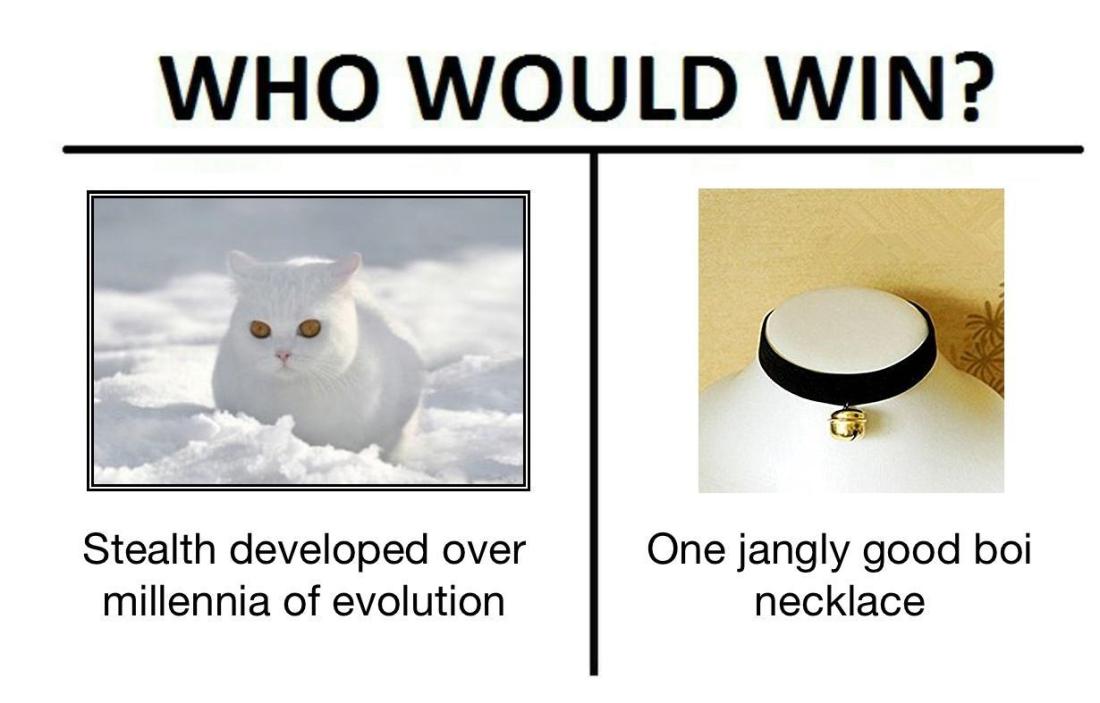
did u kno that if you put a bell collar on an outdoor cat they will learn to hunt around the bell’s sound and then when you take the bell off they will be 1000x better at hunting
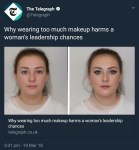
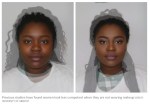
So if women wear makeup at work we’re “frivolous” and it harms our leadership chances.. but if we don’t wear makeup we are being unprofessional and are deemed less competent.
So we just need to think of a way for women to not have faces and we’re all set 🤔
A clear example of how performance of femininity is both compulsory (enforced by social, legal, and economic consequences) and devalued because of misogyny.




















 funeral-biscuit