i feel like part of the weirdness with gender on this site is that like…. cis is a useful term and social locator and i want to be clear i’m not denying that but cis women do not relate to gender the way cis men do and people on here kind of know that but also don’t really talk about it which muddies the ideas of both what it means to be cis and what it means to be a woman
a couple people asked for elaboration so this is very cursory, but
womanhood is inherently unpleasant. it’s a social location relative to patriarchy that is constraining and harmful, and while of course there are a multitude of individual experiences that fall under womanhood, i think it’s safe to say that most women, cis or trans, are conscious of some degree of discomfort with it. this runs the gamut from comparatively “minor” things like chafing under compulsory femininity to more overtly harmful things like fearing and/or surviving rape, abuse, intimate partner violence, and so on. women of color specifically are often coercively masculinized and denied their womanhood because much of “femininity” is constructed around whiteness.
and yet there’s often an idea on this site (i almost always see it perpetrated by well-meaning cis people) that all trans people must be miserable in their experience of gender and all cis people must be at worst indifferent to it and at best delighted about it. that’s really just a completely misleading and oversimplified dichotomy, and one of the ways in which it breaks down is that cis women overall are just way more likely than cis men to be unhappy in our experience of gender and alienated from it to some extent, but that doesn’t mean we aren’t still in the social position of being cis. (i don’t have time to unpack this as it relates to nb transmisogyny-exempt women.)
this is obviously also harmful to trans people, who then become viewed only in terms of pain and suffering, and are frequently expected to demonstrate how miserable they are in order to access things like medical/legal transition or basic compassion.
again, this is really bare-bones and it’s not the only way in which the suffering/not suffering dichotomy fails us. for instance, men of color, particularly black men, don’t get afforded “easy” cis manhood or masculinity the way white men do; even cis manhood is not as simple or unified as some people on here think. if cis just meant “completely loves their assigned gender and is never unhappy about it, excluded from it, or forced into it” there would be far fewer cis people. basically, these terms are useful because they convey information about a person’s relation to certain power structures, but sometimes people try to turn them into intrusive psychological evaluations and it’s not effective.
i just saw a fb post where a man was arguing with a woman about the best way to make macarons and he kept insisting that she was wrong, and then eventually he was like “I’ve never personally made macarons, but if you think about it what I’m saying makes sense, i’m simply stating the obvious. i’m sure there are plenty of youtube tutorials that would show you the same thing.” and the woman replied by linking him to her instagram business page and she makes fuckin macaron towers for parties for a living and i’ve been laughing about it for a solid 5 minutes.
Men automatically assume they’re more of an expert on something than any woman on account of their dicks. I’ve never met such an ignorant and narcissistic creature as a male
I’ll never forget a time when a fb friend of mine posted that she’s on her way to hospital to give birth. Women commented with “good luck” and other encouraging messages. A man’s comment was advice on how to give birth.
You have got to be kidding me
So I was talking about Jekyll & Hyde (the book) at a writer’s museum while we were looking at an Robert Louis Stevenson exhibit. I was giving my take on Jekyll, and my brother tried to counter it. I countered back easily, and then he said “well I’ve never read the book”
My dude………..stop
my ex, whose baking experience was pretty much limited to frying premade biscuit dough in boy scouts to make ‘donuts’, would constantly try to correct me or give me advice on baking
i’m a fucking pastry chef
met a dude at a party who was talking about physics and asked if i’d ever listened to any online physics lectures bc he listened to all of this one series and they were so helpful and maybe i could learn some physics too
i have a degree in physics
and am a published coauthor in astrophysics
the best part is that the woman who invented the term ‘mansplaining’ (her name is Rebecca Solnit and i highly recommend her collection of essays) came up with it when she was at a party one night and a man tried to explain a book to her, and wouldn’t let her speak long enough for her to tell him that
she wrote the bloody book he was mansplaining to her
What I think is really interesting about the papyrus account of the workers building the tomb of Rameses III going on strike to demand better wages is really fascinating to me because if you look at the description given by the royal scribe you see that there was an attempt to satisfy the workers by bringing a large amount of food at once but that was rebuffed by the workers who declared that it wasn’t just that they were hungry at the moment but had serious charges to bring that “something bad had been done in this place of Pharoah” (is poor wages and mistreatment). They understood themselves as having long term economic interests as a -class- and organized together knowing that by doing so they could put forward their demands collectively. It so strongly flies in the face of narratives that are like “in this Time and Place people were happy to be serve because they believed in the God-King and maybe you get some intellectual outliers but certainly no common person questioned that”. If historical sources might paint that sorta picture of cultural homogeneity it is because those sources sought not to describe something true but invent a myth for the stability of a regime.
Since this is getting notes here’s a link to a translation of the papyrus scroll and here’s an article that gets further into the economic situation surrounding the strike and giving an explanation of the events. The workers didnt just refuse to construct Rameses III’s future tomb, they actually occupied the Valley of the Kings and were preventing anyone from entering to perform rituals or funerals. Basically they set up the first ever recorded picket line
Again the workers went on strike, this time taking over and blocking all access to the Valley of the Kings. The significance of this act was that no priests or family members of the deceased were able to enter with food and drink offerings for the dead and this was considered a serious offense to the memory of those who had passed on to the afterlife. When officials appeared with armed guards and threatened to remove the men by force, a striker responded that he would damage the royal tombs before they could move against him and so the two sides were stalemated.
Eventually the tomb workers were able to win the day and acquire their demands and actually set a precedent for organized labor and strikes in Egyptian society that continued for a long time
The jubilee in 1156 BCE was a great success and, as at all festivals, the participants forgot about their daily troubles with dancing and drink. The problem did not go away, however, and the workers continued their strikes and their struggle for fair payment in the following months. At last some sort of resolution seems to have been reached whereby officials were able to make payments to the workers on time but the dynamic of the relationship between temple officials and workers had changed – as had the practical application of the concept of ma’at – and these would never really revert to their former understandings again. Ma’at was the responsibility of the pharaoh to oversee and maintain, not the workers; and yet the men of Deir el-Medina had taken it upon themselves to correct what they saw as a breach in the policies which helped to maintain essential harmony and balance. The common people had been forced to assume the responsibilities of the king.
[…]
The success of the tomb-worker/artisan strikes inspired others to do the same. Just as the official records of the battle with the Sea Peoples never recorded the Egyptian losses in the land battle, neither do they record any mention of the strikes. The record of the strike comes from a papyrus scroll discovered at Deir el-Medina and most probably written by the scribe Amennakht. The precedent of workers walking away from their jobs was set by these events and, although there are no extant official reports of other similar events, workers now understood they had more power than previously thought. Strikes are mentioned in the latter part of the New Kingdom and Late Period and there is no doubt the practice began with the workers at Deir el-Medina in the time of Ramesses III.
There was also a strike at one point where construction workers refused to continue until they were given sufficient “cosmetics.”
This was thought a highly strange thing until somebody deciphered the recipe for the “cosmetics” the workers were demanding and recreated it.
It was sunscreen. Sunscreen.
Making that the first recorded strike over occupational safety.
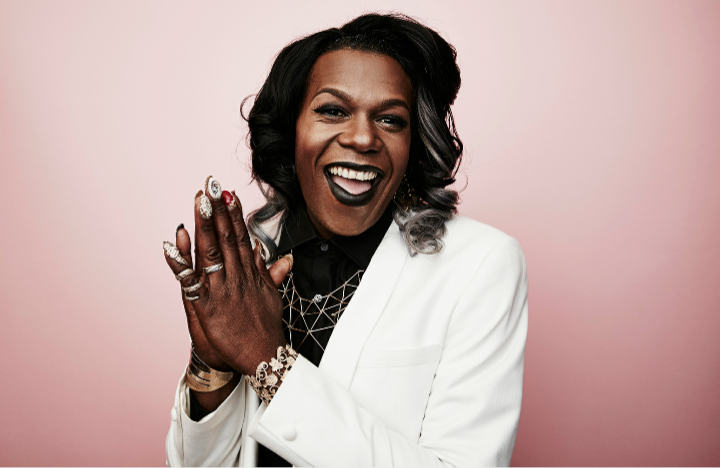
Big Freedia – Freddie Ross is a gay man who answers to both she/he pronouns. Often called the Queen of Bounce, he specializes in bounce, edm, dance, and hiphop music.
Cakes da Killa – Born Rashard Bradshaw, he’s a gay American rapper based in New York. His debut album “Hedonism” was released in 2016.
Frank Ocean – Frank Ocean is a r&b/hiphop artist who has dated both men and women, but doesn’t claim any labels as his own. In fact he actively rejects labelling himself. “Chanel” is a must listen.
Keiynan Lonsdale – Singer/actor who played the love interest in Love, Simon. He’s also released some truly amazing music this year like “Preach” and “Kiss the boy.” On his sexuality he had this to say “I actually don’t label myself…some people call me queer, some people call me bisexual, whatever it is now I’m happy with all of it.”
Kele Okereke – The gay lead singer of indie rock band Bloc Party. He’s also released two solo albums under the mononym “Kele” and a third under his full name.
Kevin Abstract – Gay & a founding member of hiphop group Brockhampton. Kevin is a rapper and singer-songwriter, and released his debut solo album in 2014. In 2016 he came out and released his second and very gay album “American Boyfriend.”
Le1f – Born Khalif Diouf, he’s a gay rapper and producer. His debut album “Riot Boi” was released in 2015.
Mykki Blanco – Originally on the music scene as a transgender woman, Mykki decided not to transition and live his truth as a gay, HIV positive man. He said “I am a femme gay man, but my trans journey is who I am.” He is a rapper, poet, and activist.
Taylor Bennet – Bisexual rapper & brother of Chance the Rapper. One of his latest singles “Be Yourself” is very gay and very good. I also love the song he did with his brother, “Broad Shoulders.”
Todrick Hall – Gay pop/hip house musician, dancer, drag queen, and choreographer. He released a new album “Forbidden” just this year. Listen to “Boys wear pink.”





 funeral-biscuit