Well, let’s start with the important full disclosure here: I’m Dahlia Adler. (Glad you liked the book – thank you <3) I run this site, this Tumblr, this everything, so there isn’t anyone I can pass this question off to. That said, I do my best to be as objective as possible in this space, and I’ll do the best I can here.
I do stand by the rep in the book. I find the thought that queer books should never contain stereotypical behavior stifling and limiting as an author, a reader, and a person* and I wrote the kind of character and trope I wanted to read, and who also felt like certain shades of both who I was in college and who I might’ve been if I’d known I was queer back then.
That said, it’s valid to feel the other way too. There aren’t a lot of books with main characters who ID as pansexual and there’s a certain kind of hypersexual persona that is overly associated with pan people and it feels like Frankie feeds into all of that. If you don’t like that in a character, or feel like it’s important pan people not be written that way (or at least not when there are so few pan MCs out there), then it is a book where you are not going to like the rep, and that’s 100% valid. I don’t see hypersexuality as a negative, especially where no cheating or lying are at play (which they aren’t in OoGB), but when people automatically make the association between pansexuality and hypersexuality, that’s really annoying, and it’s not a book that’s going to help with that. To my mind I made the careful distinction that Frankie isn’t hypersexual because she’s pan, but it’s obvious that either I wasn’t successful in that for some readers or it wouldn’t have mattered if I had been, and both of those responses to it are valid.
So, the tl;dr version is: it’s valid to think it’s bad rep. It’s also valid to think it’s good rep. It’s valid to think it’s somewhere in between. I don’t think it’s objectively any of those things.
Also, because I’ve been looking for a way to make this exact book rec and now I can just straight-up do it: If you didn’t like the pan rep in Out on Good Behavior (or even if you did but just want to see more that looks different), please pick up Final Draft by Riley Redgate when it comes out in June. It could not be more different in that regard and I think it’s exactly the kind of pan rep people who want it to be less stereotypical are looking for. (Redgate is, of course, the author behind YA’s first mainstream on-page pan main character, in Seven Ways We Lie, but this is a single-POV book and also the main, pan character is female.)
*For example, when I see gay male authors discussing how wildly few effeminate male main
characters there are, because it’s So Important that we buck the
stereotype and instead make them all athletes who would never dream of
touching makeup or loving musicals, which…doesn’t feel great for more effeminate gay kids or for the authors who were those kids and don’t feel they can sell books with those characters.
This post has some interesting food for thought on exactly how we frame the “don’t write this; it’s a stereotype” argument to have more nuance.
remember that short story they made you read in school called The Lottery where the whole town gets together and just stones a motherfucker at random what the fuck was up with that
Actually, I know what was up with that!
When The Lottery (by Shirley Jackson) was first published, tons of people wrote into the newspaper that published it to demand to know what the hell it was meant to be about
I suppose, I hoped, by setting a particularly brutal ancient rite in the present and in my own village to shock the story’s readers with a graphic dramatization of the pointless violence and general inhumanity in their own lives.
So basically the story is written in such a way that the uncritical nature of the townspeople is highlighted, when it comes to their own traditions. Every year the town commits outright violent murder, but because it’s ‘normal’ to them, they don’t think of it in those terms. The reader, who isn’t part of the town’s cultural assumptions, sees the horrific nature of their actions. But the characters in the story don’t.
In essence, it’s a story about normalization (before that phrase was coined). The point is to make you think about what cruelties might be passing uncriticized in your own culture, just because they seem ‘normal’ to you. Maybe your town doesn’t stone someone to death once a year, but there are other ways for communities to kill people, or let them suffer. And some of those are just as needless and just as rooted in unquestioned assumptions about how the world works, or how society needs to operate. The people in The Lottery were hesitant to give up their tradition because they believed it guaranteed them a good harvest. Revealing, in that hesitance, that the possibility of a bad outcome was more frightening to them than an atrocity they’d normalized.
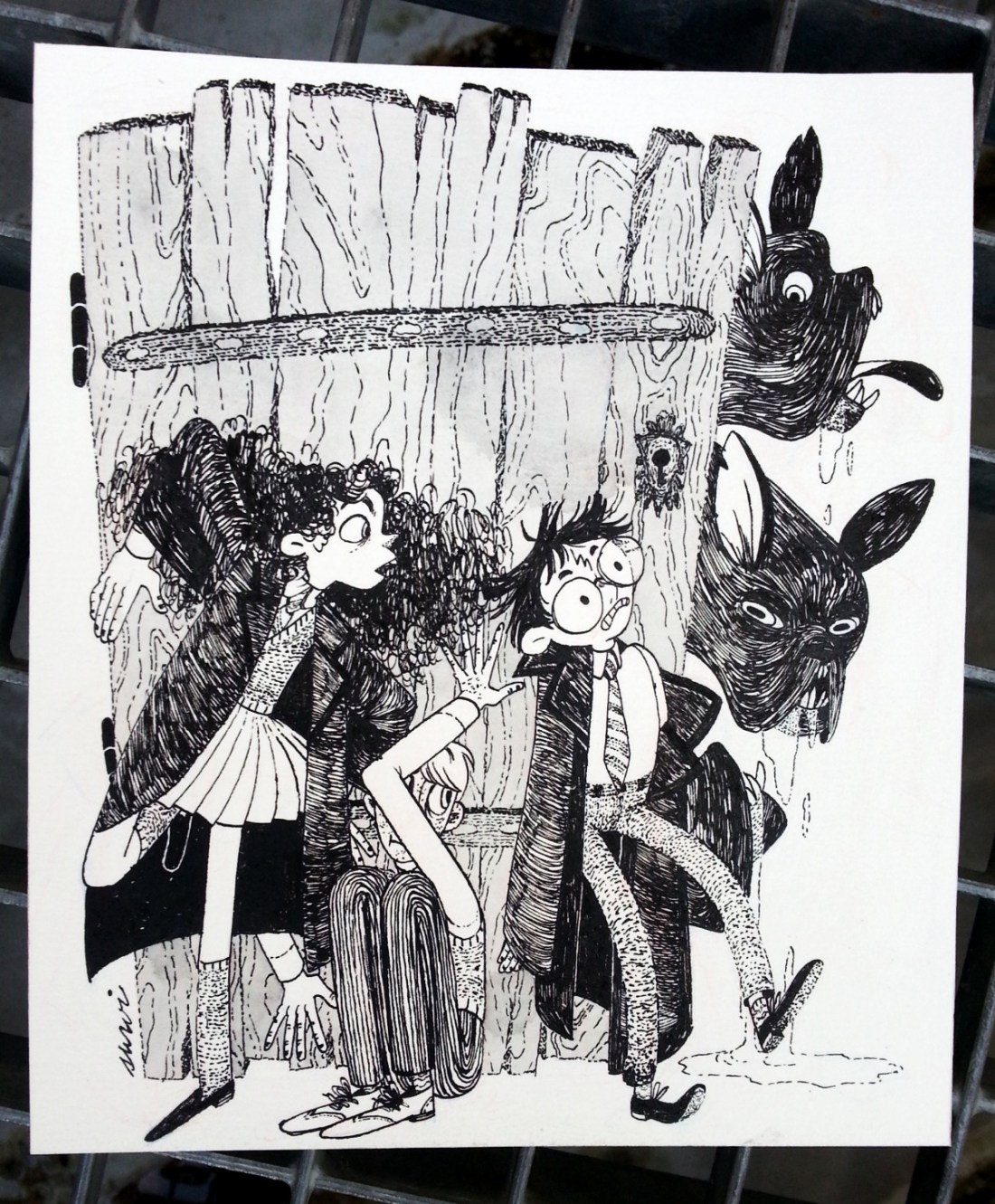
I’m sorry to be so slow with the requests but I’m not close to scanner now, so it’s a bit problematic to post anything ^^ But here goes the first one for the Anonymous who requested Harry, Ron, and Hermione sneaking past Fluffy (I’ve just now realized that they should be sneaking past, sorry about that!)
I know most people don’t care, but here’s the real answer.
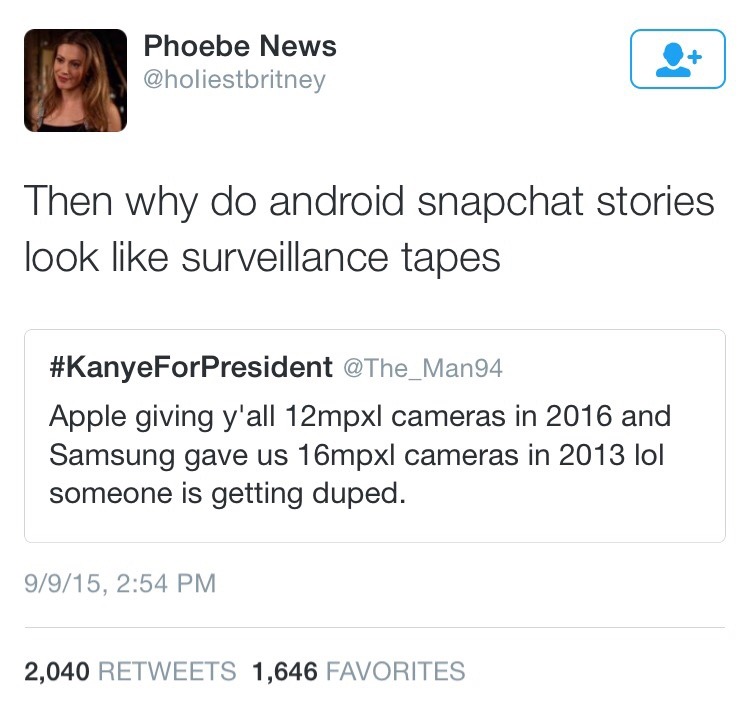
Snapchat built a shitty Android app. On iOS, Snapchat uses the phone’s camera directly to take a picture, ensuring the highest possible quality.
On Android, Snapchat opens the camera, but then takes a screenshot, instead of telling the camera to take a picture. This means that the camera never gets to adjust it’s focus and lighting, or provide stabilization to the picture. Instead, you get the best that shaky human hands can get, which means low quality pictures.
Due to the popularity of Snapchat, this difference actually spreads the superiority complex of iOS. Android manufacturers have been innovating new hardware since the creation of cell phones. Apple only upgrades when they’re worried about being seen as outdated, or they need “new features” to push their phone. It also shows that iPhones are a status symbol, that have no reason to be as expensive as they are.
To be fair to Apple, they’ve built a consistent ecosystem. If you have an iPhone, you can pick up any other iPhone and know how it works. Android is different by design however, with literally anyone free to modify it as they want to. Whether that is to fit certain hardware, or add new features, or meet a specific artistic design, Android has more total devices, support for more hardware configurations (even laptops) and is available for anyone to use however they want.
Snapchat made a deliberate poor design decision, and should shoulder the blame for their shitty app. But that would require supporting the largest userbase in the world over their elite base of iPhone users.
Don’t confuse my hatred of the hyperwealthy for jealousy over what they have. I don’t want a six figure sports car, or a 40 room mansion, or a gold leaf truffle wagyu steak dinner. I want redistribution of wealth that allows for infrastructural support of all citizens’ basic survival needs.



 funeral-biscuit