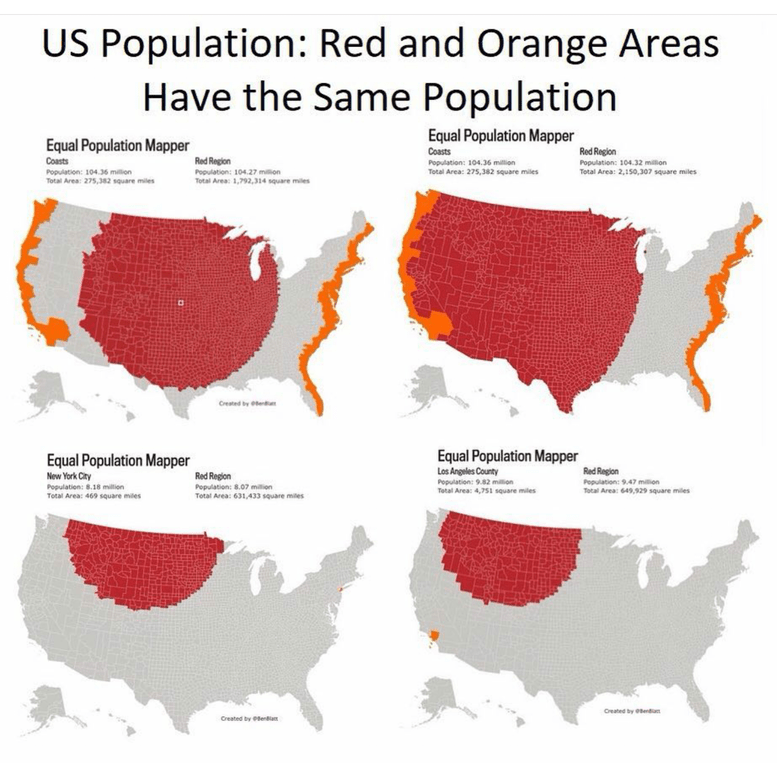
though looking at the comments the folks who live in the red part think this is why the electoral college has got to stay. because they like getting 3.5 votes per capita.
Tyranny of the few is a pretty sweet deal if you belong to the few.
“Why should the coast’s vote count more?” BECAUSE THAT’S WHERE THE PEOPLE ARE AND THIS IS SUPPOSEDLY A DEMOCRACY.
no one tagged me, but i wanted to post six selfies…
that hair… HOW YOU DO THAT HAIR PLZ TEACH
😀
Buckle in, because this is going to be a LONG post. And I’m going to talk about BOG MUMMIES.
For reference, the hair in question:
This updo was actually what convinced me to grow my hair long in the first place (back in ye old 2008), and it has been strongly influential in my personal aesthetic ever since.
The story starts in 1938. Actually, it starts even earlier than that. In ~280 B.C., a woman died, and her body was placed in a bog, where it stayed until it was discovered in 1938, so well-preserved that the hair was still there.
This bog mummy is referred to as the Elling Woman. Here’s a bit about her.
The article talks a bit about her hair, but it’s kind of an unsatisfactory description. I found out about it when the article reached the Long Hair Community Forum in 2008, resulting in a 40-page (and counting!) thread wherein a bunch of long-haired women figured out how to recreate the hairstyle.
The ladies of LHC looked at the images of the hair, and were like: “Yep, that’s a rope braid.” “Here’s how you could do a 7-strand braid with 2-3-2 sections.” Etc. And basically, they tested out different versions, and came up with something that was cool-looking, comfortable, and practical.
Here’s the ~official~ reconstruction on the Tollund Man website:
And here’s a (very confusing) diagram of how the style is supposedly constructed:
There are several different recreations of the style floating around the LHC and youtube and the wider internet. The style also looks and works differently with different types of hair. I had to grow mine out until I could make a waist-length braid before I could really successfully do it with my hair, but my hair is medium-thick and fairly fine, so YMMV. Some people on the LHC did it with much shorter and thicker hair.
The LHC thread about it is a fun read, but it’s a bit long and meandering, and there are several conflicting sets of instructions there, so I’ll just talk about the method that I use. If you want a video aid, what I do is basically this, except I do rope braids for the bottom 2/3s instead of English braids, and I finish it by wrapping the thick braid around the middle braid, like this (I’ve never actually tried that particular method for forming the big braid, but finishing up the bun is the same).
Here’s a written description:
Take the top 1/3 of your hair and braid it in a basic 3-strand braid (a.k.a. an English braid) down to a little past your neck. Tie it off so that it stays braided while you braid the rest of your hair.
Separate your remaining hair into two sections (each about 1/3 of your total hair), one on the left side, and one on the right.
Braid each section into a rope braid (a two-strand braid that’s made by twisting both sections in the same direction, then twisting them together in the opposite direction). Tie them off so that they stay braided. Also, I’ve found that it’s better to make the rope braids so that they’re coiled in opposite directions.
Take the two rope braids, and braid them with the top/middle section of your hair that you’d braided into an English braid. You’re basically making one big English braid. After I’ve started braiding it, I slip off the elastic tie that I’d used to hold the middle braid together temporarily.
Braid it as a 3-strand (that’s made up of two 2-strand rope braids, and one one-strand section that started as a 3-strand braid, so it’s sort of a 7-strand braid!) English braid all the way to the end of your hair. Take out the elastic ties around the two rope braids when you get to them.
Tie the whole thing off with a single elastic tie at the end.
To make the bun, you lift up the simple English braid (the one you made in step one), and you wrap the thick, complicated braid around it in a spiral.
Tuck the end in as best as you can, and then secure it with whatever you want. I’ve used everything from a hair stick, a hair comb, a few bobby pins, and even a single barrette before.
You’re done!
There wasn’t any evidence of any hair pins or anything like that to secure the hair found with the Elling Woman’s body. If your hair is very oiled and/or very unwashed, it might be able to hold itself in place without needing to be tied or secured. As it is, this style does work better if your hair has been oiled, or hasn’t been washed for several days.
This hairstyle is really cool for a lot of reasons, but it’s also extremely comfortable! The middle braid essentially holds the whole thing up, so you don’t experience any of the pulling you feel with some buns.
Basically, if I had to wear the same hairstyle for thousands of years, I’d definitely pick this one. It’s beautiful, versatile, comfortable, and has a really cool backstory.
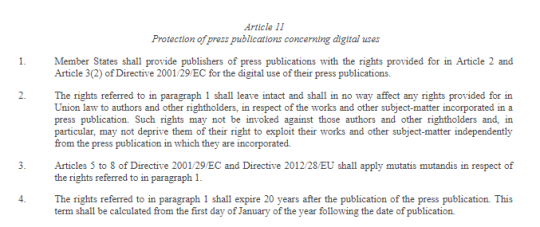
If you’re European, in a couple of weeks you will be denied any and all access to fandom contents on Tumblr and everywhere else on the internet. Here’s why.
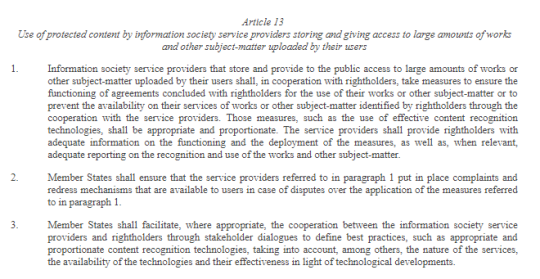
On June, 20th the JURI of European Parliament approved of the articles 11 and 13 of the new Copyright Law. These articles are also known as the “Link Tax” and the “Censorship Machines” articles.
Articles 13 in particular forces every internet platform to filter all the contents we upload online, ending once and for all the fandom culture. Which means you won’t be able to upload any type of fandom works like fan arts, fan fictions, gif sets from your favourite films and series, edits, because it’s all copyrighted material. And you won’t also be able to share, enjoy or download other’s contents, because the use of links will be completely restricted.
But not everything’s lost yet. There’s another round of voting scheduled for the early days of July.
What you can do now to save our internet, is to share these informations with all of your family members and friends, and to ask to your MEP (the members of the European Parliament from your country) to vote NO at the next round, to vote against articles 11 and 13.
Here you can find more news and all the details to contact your MEP:
We have just a couple of weeks to stop this complete madness, don’t let them dictating the way we enjoy our internet.
#SaveYourInternet now!
It’s funny how y’all will reblog any and all US things but when whole Europe might lose access to internet then everything is quiet.
Hey, guys! It’s me, your friendly neighborhood law student!
I am seeing this circling my dashboard (yet again) and I would like to say a few things about it. Once again, as I have stated before when I’ve weighed in on something, I am not a lawyer (yet). But, that being said…
Please stop being sensationalist. There are many legitimate criticisms of this directive, but these are not the criticisms I am seeing being spread around. Instead, what’s being spread around amounts to fearmongering. I don’t blame you for doing so – the vast majority of this is being started by the people this will hit hardest, AKA big corporate giants such as Google, Amazon and Microsoft. They have the kind of press pull that very easily leads to this kind of panic.
So, for any of my followers having anxiety about this, let me soothe your worries and address them point by point.
1. “This will destroy the internet in two weeks”
No, no, it won’t. This is a directive, meaning (unlike, say, the the last thing to bring my work onto my tumblr, the fucking GDPR) that it leaves the goals of the directive open to somewhat free implementation by member states, as long as the basic goals of the directive are met on time. As such, it will be years before we actually see any binding legislation as a result of this directive, and how member states choose to implement it will vary on the state in question.
2. “Article 11 will completely restrict the use of links”
Article 11, AKA what is being referred to as the link tax, essentially implements what we call the ancillary copyright of press publishers. This right gives press publishers the right to demand compensation when snippets of their content are displayed on other web pages. So, essentially, this is an article almost directly designed to bop Google (who currently holds the kind of leading market position that the EU sees as incrediblyproblematic because it kind of goes against everything the EU stands for) on the nose. This would force Google (and, with it, other companies) to compensate the writers of articles that are mirrored to their sites in a truncated form, often leading to less traffic to the actual site in question and thus the mirroring site gaining the revenue that would otherwise be due to the writer of the article.
Now – there are legitimate criticisms of this, which mostly hinge on the fact that forcing people to pay the content creator for content they are using may lead some people to stop using that content. Personally, I think it’s better for people to receive compensation for their work, even if it comes at the cost of less sharing of the work. You are allowed to disagree. The most legitimate form of criticism of this article, in my humble opinion, is that it may lead to a picking and choosing of what content to share and what not to. The thing is – is this not something that is being done already? What does this article add to that other than to make sure that if you do choose to share someone else’s work, that other party gets compensated accordingly?
3. “Article 13 will destroy fandom culture”
No, no, it won’t. The vast majority of fandom culture falls under what US law refers to as fair use and most European national laws (which, in the case of EU countries, are harmonized according to the European Union Copyright Directive) refer to as private use. Article 13 in and of itself does not change the allowances made for private use of media in derivative works already. It merely mandates that companies must take effective measures to stop the users of their services from sharing media that infringes on copyright.
Again, I am in the boring camp of agreeing with the EU – I believe it is better for people to be compensated for their work. If the way we are currently using media in fandom is infringing on copyright, then I think we should stop using it that way. You are entirely welcome to disagree with me on this. Notice how the wording of the article constantly emphasizes how measures taken must be appropriate and proportionate. How the the content recognition technology is mentioned as an example of effective measures that could be taken to stop the uploading and sharing of copyrighted works, not as the only way of doing so. Notice how the entire third paragraph of this article deals with best practices and appropriate and proportionate technology which takes into account the availability and effectiveness of technology – so, essentially, if it sucks and flags too many things as infringing on copyright, it should not be used because it is not appropriate, proportionate or effective. And that’s right there in the directive.
And, yet again, there are legitimate criticisms of this article, including the one mentioned in the OP I am replying to regarding the limitations of sharing copyrighted material on, say, Youtube. That’s true – but you haven’t been allowed to upload full films onto Youtube as is, have you? Videos with copyrighted music in the background have been muted or deleted, as well. The most legitimate criticism I’ve seen is that these automatic copyright infringement flagging algorithms are generally overzealous, and this could lead to over-censoring of content that would actually fall under fair use/personal use/whatever you want to call it. That’s true, very true – but the article doesn’t require countries to enforce algorithms being used if they don’t work as they should. See above paragraph.
So, in conclusion: yes, this directive could stand to be worded better. Yes, it may technically lead to the kinds of doomsday scenarios people are imagining – but I really don’t think it will. In fact, I doubt you’ll notice much difference when (in a few years) these laws actually start getting implemented. Notice how no one has heard about the GDPR for like three weeks now, even though we’re living in that supposedly apocalyptic post-GDPR world? (I say, bitterly, as I wade through piles of GDPR every day at work… :D)
Still don’t like the directive proposal? That’s totally fine. By all means, call up your MEP, take a stand! Now, you’re doing it for the right reasons.
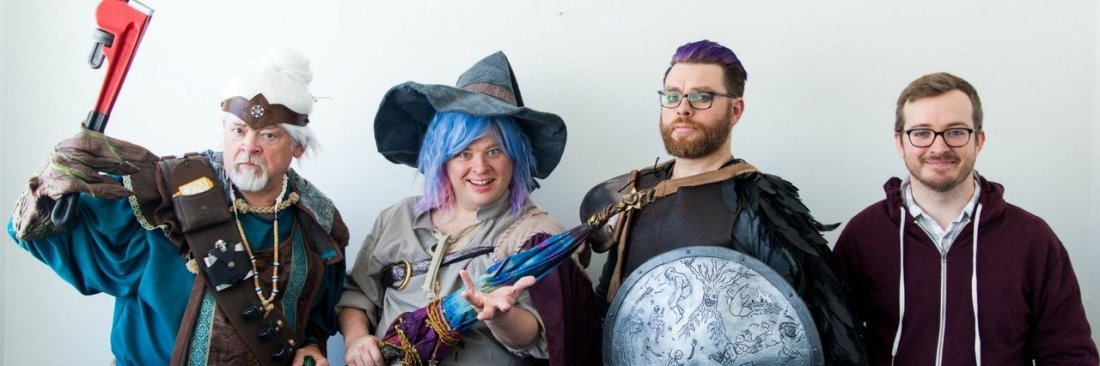
Like no offense to my friends and family but if I had the chance to abandon this timeline for a medieval fantasy land I would absolutely do it, goodbye student loans and depression hello cool magic shit and most likely an early death by the sword (as it should be)













 funeral-biscuit