“Remember: it’s OKAY not to be visible, even on #TransDayOfVisibility. You aren’t letting anyone down; you aren’t any less valid. The right to control your narrative is an essential aspect of your autonomy, and that includes deciding when and where it’s good or safe to stand out.”
Temples are built for gods. Knowing this a farmer builds a small temple to see what kind of god turns up.
Arepo built a temple in his field, a humble thing, some stones stacked up to make a cairn, and two days later a god moved in.
“Hope you’re a harvest god,” Arepo said, and set up an altar and burnt two stalks of wheat. “It’d be nice, you know.” He looked down at the ash smeared on the stone, the rocks all laid askew, and coughed and scratched his head. “I know it’s not much,” he said, his straw hat in his hands. “But – I’ll do what I can. It’d be nice to think there’s a god looking after me.”
The next day he left a pair of figs, the day after that he spent ten minutes of his morning seated by the temple in prayer. On the third day, the god spoke up.
“You should go to a temple in the city,” the god said. Its voice was like the rustling of the wheat, like the squeaks of fieldmice running through the grass. “A real temple. A good one. Get some real gods to bless you. I’m no one much myself, but I might be able to put in a good word?” It plucked a leaf from a tree and sighed. “I mean, not to be rude. I like this temple. It’s cozy enough. The worship’s been nice. But you can’t honestly believe that any of this is going to bring you anything.”
“This is more than I was expecting when I built it,” Arepo said, laying down his scythe and lowering himself to the ground. “Tell me, what sort of god are you anyway?”
“I’m of the fallen leaves,” it said. “The worms that churn beneath the earth. The boundary of forest and of field. The first hint of frost before the first snow falls. The skin of an apple as it yields beneath your teeth. I’m a god of a dozen different nothings, scraps that lead to rot, momentary glimpses. A change in the air, and then it’s gone.”
The god heaved another sigh. “There’s no point in worship in that, not like War, or the Harvest, or the Storm. Save your prayers for the things beyond your control, good farmer. You’re so tiny in the world. So vulnerable. Best to pray to a greater thing than me.”
Arepo plucked a stalk of wheat and flattened it between his teeth. “I like this sort of worship fine,” he said. “So if you don’t mind, I think I’ll continue.”
“Do what you will,” said the god, and withdrew deeper into the stones. “But don’t say I never warned you otherwise.”
Arepo would say a prayer before the morning’s work, and he and the god contemplated the trees in silence. Days passed like that, and weeks, and then the Storm rolled in, black and bold and blustering. It flooded Arepo’s fields, shook the tiles from his roof, smote his olive tree and set it to cinder. The next day, Arepo and his sons walked among the wheat, salvaging what they could. The little temple had been strewn across the field, and so when the work was done for the day, Arepo gathered the stones and pieced them back together.
“Useless work,” the god whispered, but came creeping back inside the temple regardless. “There wasn’t a thing I could do to spare you this.”
“We’ll be fine,” Arepo said. “The storm’s blown over. We’ll rebuild. Don’t have much of an offering for today,” he said, and laid down some ruined wheat, “but I think I’ll shore up this thing’s foundations tomorrow, how about that?”
The god rattled around in the temple and sighed.
A year passed, and then another. The temple had layered walls of stones, a roof of woven twigs. Arepo’s neighbors chuckled as they passed it. Some of their children left fruit and flowers. And then the Harvest failed, the gods withdrew their bounty. In Arepo’s field the wheat sprouted thin and brittle. People wailed and tore their robes, slaughtered lambs and spilled their blood, looked upon the ground with haunted eyes and went to bed hungry. Arepo came and sat by the temple, the flowers wilted now, the fruit shriveled nubs, Arepo’s ribs showing through his chest, his hands still shaking, and murmured out a prayer.
“There is nothing here for you,” said the god, hudding in the dark. “There is nothing I can do. There is nothing to be done.” It shivered, and spat out its words. “What is this temple but another burden to you?”
“We -” Arepo said, and his voice wavered. “So it’s a lean year,” he said. “We’ve gone through this before, we’ll get through this again. So we’re hungry,” he said. “We’ve still got each other, don’t we? And a lot of people prayed to other gods, but it didn’t protect them from this. No,” he said, and shook his head, and laid down some shriveled weeds on the altar. “No, I think I like our arrangement fine.”
“There will come worse,” said the god, from the hollows of the stone. “And there will be nothing I can do to save you.”
The years passed. Arepo rested a wrinkled hand upon the temple of stone and some days spent an hour there, lost in contemplation with the god.
And one fateful day, from across the wine-dark seas, came War.
Arepo came stumbling to his temple now, his hand pressed against his gut, anointing the holy site with his blood. Behind him, his wheat fields burned, and the bones burned black in them. He came crawling on his knees to a temple of hewed stone, and the god rushed out to meet him.
“I could not save them,” said the god, its voice a low wail. “I am sorry. I am sorry. I am so so sorry.” The leaves fell burning from the trees, a soft slow rain of ash. “I have done nothing! All these years, and I have done nothing for you!”
“Shush,” Arepo said, tasting his own blood, his vision blurring. He propped himself up against the temple, forehead pressed against the stone in prayer. “Tell me,” he mumbled. “Tell me again. What sort of god are you?”
“I -” said the god, and reached out, cradling Arepo’s head, and closed its eyes and spoke.
“I’m of the fallen leaves,” it said, and conjured up the image of them. “The worms that churn beneath the
earth. The boundary of forest and of field. The first hint of frost
before the first snow falls. The skin of an apple as it yields beneath
your teeth.” Arepo’s lips parted in a smile.
“I am the god of a dozen different nothings,” it said. “The petals in bloom that lead to
rot, the momentary glimpses. A change in the air -” Its voice broke, and it wept. “Before it’s gone.”
“Beautiful,” Arepo said, his blood staining the stones, seeping into the earth. “All of them. They were all so beautiful.”
And as the fields burned and the smoke blotted out the sun, as men were trodden in the press and bloody War raged on, as the heavens let loose their wrath upon the earth, Arepo the sower lay down in his humble temple, his head sheltered by the stones, and returned home to his god.
Sora found the temple with the bones within it, the roof falling in upon them.
“Oh, poor god,” she said, “With no-one to bury your last priest.” Then she paused, because she was from far away. “Or is this how the dead are honored here?” The god roused from its contemplation.
“His name was Arepo,” it said, “He was a sower.”
Sora startled, a little, because she had never before heard the voice of a god. “How can I honor him?” She asked.
“Bury him,” the god said, “Beneath my altar.”
“All right,” Sora said, and went to fetch her shovel.
“Wait,” the god said when she got back and began collecting the bones from among the broken twigs and fallen leaves. She laid them out on a roll of undyed wool, the only cloth she had. “Wait,” the god said, “I cannot do anything for you. I am not a god of anything useful.”
Sora sat back on her heels and looked at the altar to listen to the god.
“When the Storm came and destroyed his wheat, I could not save it,” the god said, “When the Harvest failed and he was hungry, I could not feed him. When War came,” the god’s voice faltered. “When War came, I could not protect him. He came bleeding from the battle to die in my arms.” Sora looked down again at the bones.
“I think you are the god of something very useful,” she said.
“What?” the god asked.
Sora carefully lifted the skull onto the cloth. “You are the god of Arepo.”
Oh gosh I’m crying…
Hey, I usually don’t tack onto long posts like this, but I had to give this a {very worthwhile} read because of the name of the farmer and the significance thereof.
The Sator Square is paradoxical—scrawled in ancient ruins, it’s able to be read forwards, backwards, up, and down, one of the first historical examples of palindromes.
SATOR means a sower, a planter
TENET means “to hold”
OPERA is “work” or “care”
ROTAS are wheels
But AREPO? Nobody really can translate what that is.
Arepo in the SATOR Square, just like Arepo in the story, is forgotten and overlooked.
But without AREPO, the SATOR Square would not work; without the story’s Arepo, the world would not see even the smallest gifts of life.
One proposed translation/reading is – “ Assuming AREPO to be a possible proper name, though, the most common reading of the square is ‘the farmer/gardener (SATOR) AREPO holds (TENET) and works (OPERA) wheels (ROTAS). (The Gardener Arepo holds and works the wheels/plough) “
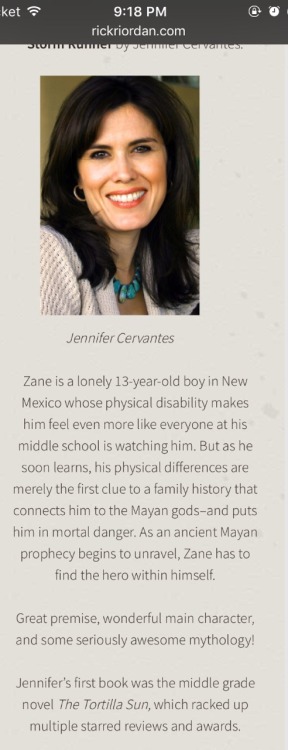
13-year-old boy must save the world by unraveling an ancient Mayan prophecy
Zane must not only grapple with a family history that connects him to the Mayan gods, but with newly acquired knowledge that his ancestry may have something to do with a leg deformity that requires he use a cane — not the greatest reality for a middle schooler.
Feisty heroes, tricky gods, murderous demons, and spirited giants are just some of the pleasures that await in this fresh and funny take on Mayan mythology, as rich and delicious as a mug of authentic hot chocolate
The Storm Runner comes out on September 18, 2018.
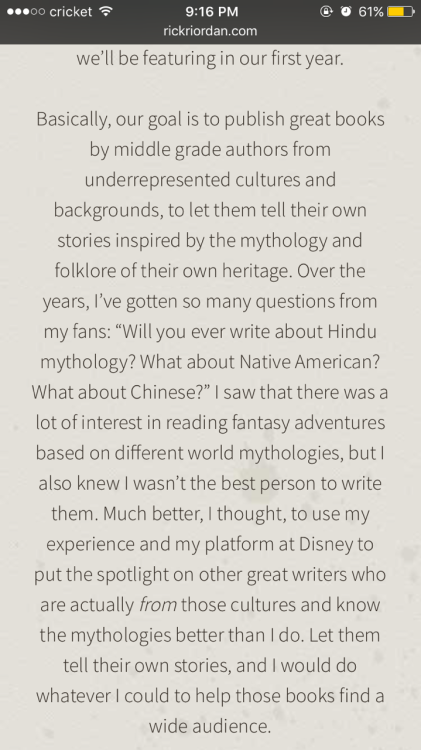
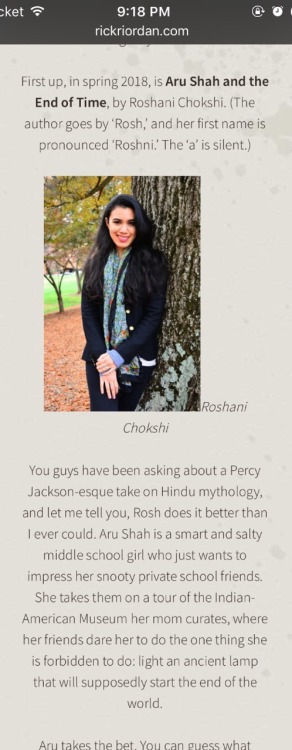
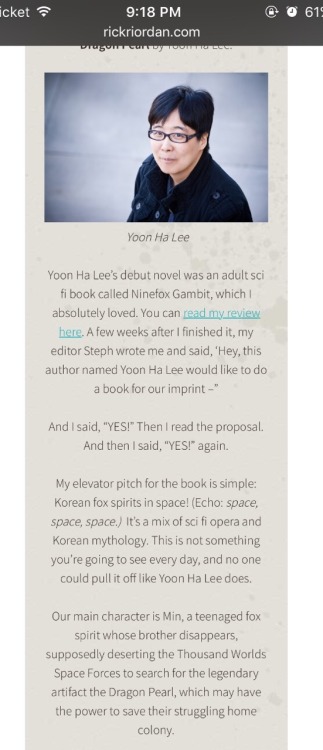
HOLY FUCK IF YOU DONT KNOW ABOUT THE RIORDAN PRESENTS BRAND YOU ABSOLUTELY HAVE TO HEAR ABOUT IT
(All of these screenshots are from the official riordan website btw)
THAT IS QUITE POSSIBLY THE GREATEST THING HE POSSIBLY COULD HAVE DONE WITH HIS POWER OMFG HE DIDNT KNOW ENOUGH ABOUT EACH MYTHOLOGY SO HE GOT WRITERS FROM THOSE CULTURES THIS IS THE FIRST TIME IVE HEARD OF ANY WRITER DOING SO
We naturally put millionaires and billionaires in the same general class of person, but the only reason to do that is because the words are similar. Since these aren’t numbers we can actually visualize, it’s important to understand what a billion of something is. To travel a million inches, you’d have to travel from the Southern-most tip of Manhattan and go to the Bronx. To travel a billion inches, you’d have to fly from New York to Shanghai twice. A million seconds is a little over 11 days. A billion seconds is nearly 32 years. A million ounces is about the weight of a train car. A billion ounces is 4.5 Eiffel Towers. Use these to conceptualize what the difference between a millionaire and a billionaire is, and the absurd amount of wealth we’re talking about.
Millionaire: I can buy a fancy sports car, and a huge house!
heres no use hiding it every single god damn link going around on april 1st is gonna be a rick roll. you already know its gonna be a rick roll and yet you still click on it
In a March 1 release, Microsoft is warning customers using Office, Xbox, Skype, and other products that the company is prohibiting offensive language and inappropriate content starting on May 1.
“Don’t publicly display or use the Services to share inappropriate content or material (involving, for example, nudity, bestiality, pornography, offensive language, graphic violence, or criminal activity),” Microsoft warns in a portion of their new codes of conduct.
Microsoft also added that the company plans on “investigating” users who are accused of violating the new policy and will block content from being sent to other people.
So will they have monitors watching 24/7 to make sure nobody says something “bad” on Skype? And so nobody uses the service for cyber sex?
Also, Office? Does that mean nobody can use the Office suite to write stories that involve sex, violence and un-PC dialogue?
Who decides what is offensive?
Who decides what is offensive?
Who decides what is offensive?
Time to go back to pen and paper my dudes.
You want fanfiction? I’ll mail it to ya, free of charge in my own slutty, slutty handwriting.
anyone got alternatives to…basically all of Microsoft’s services?

 funeral-biscuit