Mathew Knowles Claims He Thought Tina Knowles Was White, Says Colorism Played A Part In Beyoncé’s Success
Mathew Knowles is opening up about how colorism led him to pursue his ex-wife Tina Knowles-Lawson.
In an interview with Ebony magazine to promote his new book, Racism From the Eyes of a Child, Mathew recalled various experiences with colorism. For instances, he belonged to the last class at Fisk University that used the brown paper bag test on students attending the historically black college. He also claims that he initially thought Tina was white, and explained how his daughters benefit from having light skin.
“When I was growing up, my mother used to say, ‘Don’t ever bring no nappy-head black girl to my house.; In the deep South in the ’50s, ’60s and ’70s, the shade of your blackness was considered important. So I, unfortunately, grew up hearing that message,” he said.
“I have a chapter in the book that talks about eroticized rage. I talk about going to therapy and sharing–one day I had a breakthrough–that I used to date mainly white women or very high-complexion black women that looked white,” he continued. “I actually thought when I met Tina, my former wife, that she was white. Later I found out that she wasn’t, and she was actually very much in-tune with her blackness.
“I had been conditioned from childhood with eroticized rage, there was actual rage in me as a black man, and I saw the white female as a way, subconsciously, of getting even or getting back. There are a lot of black men of my era that are not aware of this thing.”
The former music executive-turned-college-professor went on to explain that the mainstream success of Bey and Solange, as well as Rihanna, Mariah Carey, and Nicki Minaj, are due in part to their skin complexions.
He further reiterated the stance on TMZ LiveMonday. “Yes colorism does exist if you look at historically what’s happened as far as crossing over to pop radio,” he said.
“I’m just bringing it to everyone’s attention,” added the father of three. “This is what happens when we talk about radio specifically.”
When prodded by host Harvey Levin, who couldn’t seem to grasp the concept of racism in the music industry (“If there’s genuine racism, they wouldn’t play black music at all,” Levin theorized.), Mathew agreed that L’Oreal lightening Beyonce’s skin in advertisements, and early photos of Whitney Houston with lighter skin, are just two examples of the colorism issue.
“Whether the Andrea Gail rolls,
pitch-poles, or gets driven down, she winds up, one way or another, in a
position from which she cannot recover. Among marine architects this is known
as the zero-moment point – the point of no return.” –Sebastian Junger, “The
Perfect Storm”
Posts like this aren’t my usual fare, but there’s a lot of
readers on Tumblr. So y’all might be interested – or, if not, you really should
be.
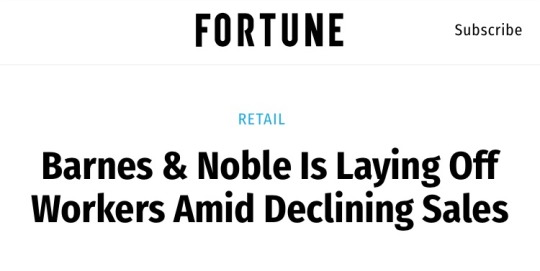
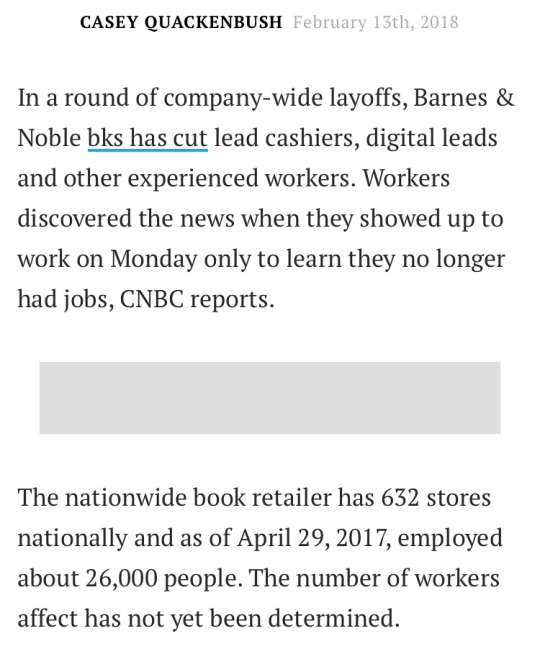
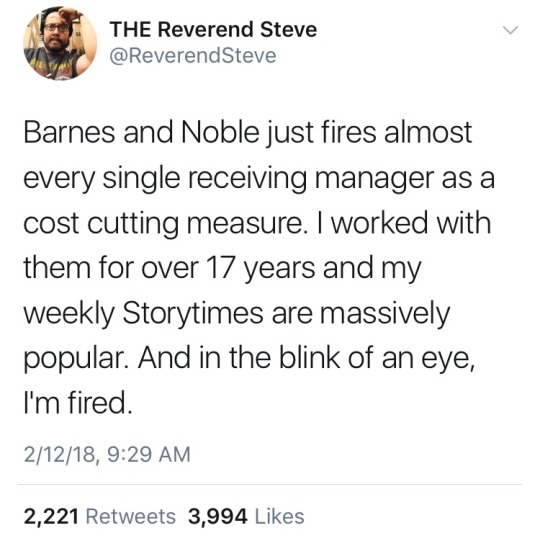
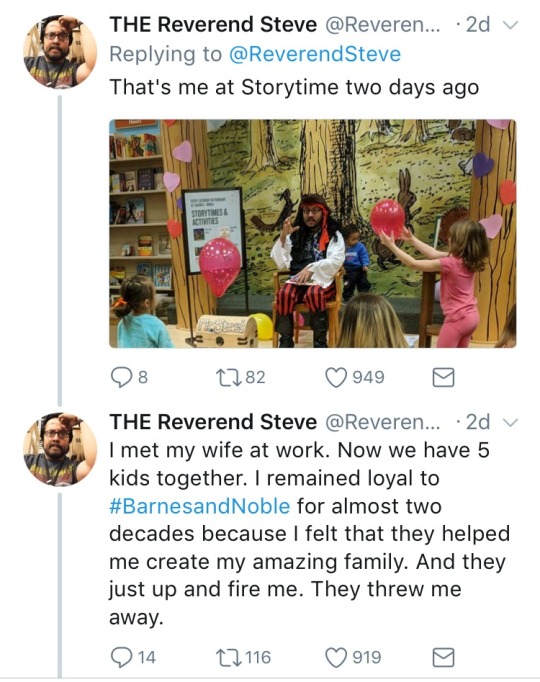
On Monday, this went down:
That’s the bloodless, matter-of-fact, ho-hum business event
way of describing it. Let me paint you a different picture.
On Monday morning, every single Barnes & Noble location –
that’s 781 stores – told their full-time employees to pack up and leave. The
eliminated positions were as follows: the head cashiers (those are the people
responsible for handling the money), the receiving managers (the people
responsible for bringing in product and making sure it goes where it should),
the digital leads (the people responsible for solving Nook problems), the newsstand
leads (the people responsible for distributing the magazines), and the bargain
leads (the people responsible for keeping up the massive discount sections). A
few of the larger stores were able to spare their head cashiers and their
receiving managers, but not many.
Just about everyone lost between 3 and 7 employees. The
unofficial numbers put the total around 1,800 people.
People.
We’re not talking post-holiday culling of seasonal workers.
This was the Red Wedding. Every person laid off was a full-time
employee. These were people for whom Barnes & Noble was a career.
Most of them had given 5, 10, 20 years to the company. In most cases it was
their sole source of income.
“Whether the Andrea Gail rolls,
pitch-poles, or gets driven down, she winds up, one way or another, in a
position from which she cannot recover. Among marine architects this is known
as the zero-moment point – the point of no return.” –Sebastian Junger, “The
Perfect Storm”
Posts like this aren’t my usual fare, but there’s a lot of
readers on Tumblr. So y’all might be interested – or, if not, you really should
be.
On Monday, this went down:
That’s the bloodless, matter-of-fact, ho-hum business event
way of describing it. Let me paint you a different picture.
On Monday morning, every single Barnes & Noble location –
that’s 781 stores – told their full-time employees to pack up and leave. The
eliminated positions were as follows: the head cashiers (those are the people
responsible for handling the money), the receiving managers (the people
responsible for bringing in product and making sure it goes where it should),
the digital leads (the people responsible for solving Nook problems), the newsstand
leads (the people responsible for distributing the magazines), and the bargain
leads (the people responsible for keeping up the massive discount sections). A
few of the larger stores were able to spare their head cashiers and their
receiving managers, but not many.
Just about everyone lost between 3 and 7 employees. The
unofficial numbers put the total around 1,800 people.
People.
We’re not talking post-holiday culling of seasonal workers.
This was the Red Wedding. Every person laid off was a full-time
employee. These were people for whom Barnes & Noble was a career.
Most of them had given 5, 10, 20 years to the company. In most cases it was
their sole source of income.


 funeral-biscuit