For anyone wondering, this is amazing enrichment for the animal and a great way to involve guests! The lions aren’t forced to play with the rope if they don’t want to, and these guys (and anyone else who tries this out) have an awesome close up and hands on experience, all without having to come in direct contact with the cat!
This definitely counts as #actually cute. This video is from the San Antonio Zoo, and the lioness’ name is Axelle. As @ordinaryredtail said above, the tug of war interaction is entirely voluntary on her part.
My guess is that the zoo staff did use some positive reinforcement training to teach her how to pick up and pull on the rope at first, because that’s not necessary something a lion would just do on their own. While it’s also probable that she’s rewarded with something tasty did choosing to engage with the members of the public like this, Axelle wouldn’t be engaging if it was a negative experience for her (there aren’t enough snacks in the world to coerce a lion into doing something they find actively distressing). If she didn’t want to participate, she could just walk away.
Some sanctuary and animal rights groups have taken issue with this interaction because they consider it unethical to ask a lion to engage in any “unnatural behavior” “for the benefit of the public,” calling it exploitation. It is worth keeping in mind, however, that learning and engaging in novel behaviors is hugely enriching for animals in human care, and that lions have no concept of exploitation. As long as the lion is not bothered by the presence or noise of the crowd, is not injured or harmed, and is engaging on an entirely voluntary basis, this sort of thing is entirely ethical. It is far safer than any type of interaction where a member of the public is coming into direct context with a big cat, but still allows people to directly experience the sheer strength of a lion up close.
They’re trying to erase the existence of the rape victims of Japanese soldiers in World War II because they think the reminder of their crimes might make Japan a little bit cross
Duterte, the absolute coward, is more worried about women criticizing him than actually honoring the women this country needs to remember
I know this is a fun tweet and all that but it absolutely is an instance of striaght privilege. Heterosexual people have up to seven years to explore their sexual and romantic attraction in an environment that is designed for them while many queer youth deligate their time in maneuvering their identity in response to themselves and their environment. It’s one of the reasons why dating as a queer adult is so hard: so many of us are romantically undersocialized when compared to our heterosexual peers, who are not only given social liscence to explore themselves, but who have the additional benefit of being able to see themselves in media.
There will always be exceptions to this, of course, but it’s so sad to see how the effects of childhood homophobia haunt us well into our adult years, to the point where it limits our opportunity to connect with other people around us.
“ My aunt also had a girlfriend. Supposedly this aunt swore to me in my cradle that I would turn out like her. Even as a child I preferred pants and a boy’s haircut. I didn’t want to wear dresses and skirts. When I first started working at AOK, I had to run errands and get files from the basement. There was always a group of women in the basement sitting, singing, and dancing with each other; I’ve always loved to dance. Sometimes they had a bottle and we drank a bit. It was there that I saw Hilde Berghausen, and I thought to myself “Gee, you could fall for that Hilde!” But I still didn’t really know why. Hilde was older than me; I was fifteen and she was twenty or twenty-one. Once she invited me home with her; I went with her—brought a pounding heart and a bouquet from our garden with me. Her parents were on vacation. We were talking and she asked me if I had a girlfriend. “Of course. Herta, my friend from school.” “There are two kinds of girlfriends.” “What do you mean, two kinds? I really love Herta!”
[…] I started going to the clubs and got to know everything around 1931, when I was fifteen. Back then, before Hitler came to power, we had a lot of clubs. For example, at the Andreas Festival Theater on Andreas Street there was a ball once a month. Through the Magic Flute, I joined a lesbian bowling club, “The Funny Nine”, which was led by Lieschen and her girlfriend Gertrud. We went bowling once a week, and once a month we rented a really big room in a dance hall on Landsberger Street. It was really nice, young and old together, fifty- to sixty-year-olds, the rest around twenty, and I was always the youngest. Later, after 1933, the proprietors–they were Nazi supporters–they stopped renting to us. Lieschen, who was in her sixties then, said “Let’s just forget this club.” And so we just forgot about it. I also went to the Monocle Bar…I still remember a lot of women who frequented that club. But they closed the Monocle Bar in 1933.
[…] When I went back home after the Labor Service, my mother found out, since all my girlfriends had written to me. I had stolen chocolate and cigarettes—we had everything in the restaurant—and I sent all my sweethearts little packages and they wrote, “My dear little Johnny-mouse, thanks so much for the wonderful package. I’m lying on my bed smoking a cigarette from you and I think of you always. Oh, I wish you were still here with me!” When my mother saw all the letters she thought “Oh my goodness, that isn’t normal; there’s something not right here.” Every day four or five letters arrived.
[…After the official ban on homosexual clubs,] outside it always said “Private Party.” You had to ring a bell and she only let in people she wanted. In 1941 there was also a very nice club on Hoch Street… but that one closed suddenly too. Even during the Nazi period there were always clubs you could go to, but they always disappeared again after a while. After 1938 there were more and more raids. If we went to one and it was closed, then we didn’t know what had happened. Before the war, Lotte Hahm had also opened a place, at Alexanderplatz in the teacher’s association building on the second floor. There used to be a dance café there. Lotte Hahm had rented it and organized ladies’ nights there. But that didn’t last very long either. […] I knew that Lotte Hahm served time in jail for seduction of a minor. That’s just nonsense; I’d never believe that about her. It was just a pretext. Then I heard that she was supposedly in a concentration camp. She really had disappeared from the face of the earth for years, so that must be true.
[…] Margot and [her girlfriend Hildegard, aka] Peter, both lived with Lissy, a woman like us who still lived at home and had already hidden one Jew, also one of us. Margot was in hiding there and Peter lived there officially. […] All of a sudden [the Gestapo] came from Gesundbrunnen Station. I said to Margot, “Don’t even bother going home; come with me.” She stayed with me at least three to six months. I had a one-room apartment. We only went outside in the dark at night; she had to get some fresh air. I had really nice neighbors who didn’t support Hitler at all. Our landlady was Jewish; the landlord wasn’t, but because they were married—a so-called privileged mixed marriage—he had been able to save her. The Jewish woman was really great; she tolerated our having girlfriends, that is, this homosexuality. She was the only one who knew I had hidden Margot. The neighbors didn’t know; I never would have said anything. Back then children even denounced their own parents. […] One evening we were at Vineta Square again and a woman from the house saw her. Margot hadn’t noticed that she was being watched. The Russians were already in Berlin, but there was still a lot of shooting. The next day the Gestapo came again—to me this time. If they had gotten her then, they would have shot her. Of course, they would have shot me too. But Margot wasn’t there; she was upstairs at Hanni’s—also one of us… When they came to check on me, I simply said “I don’t know any Margot” and they were finished with me. It was May, right before the war ended. ”
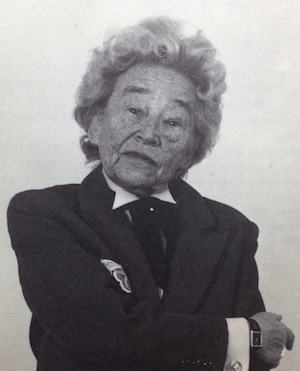
—Anneliese W. (1916-1995), from Claudia Schoppmann’s Days of Masquerade: Life Stories of Lesbians During the Third Reich











 funeral-biscuit